Chōri Picnic ~Summer Roll~
Performance in the Park,
Tanz Im August Festival,13 mins
In collaboration with Shuntaro Yoshida, Maharu Maeno, David Jongsung Myung
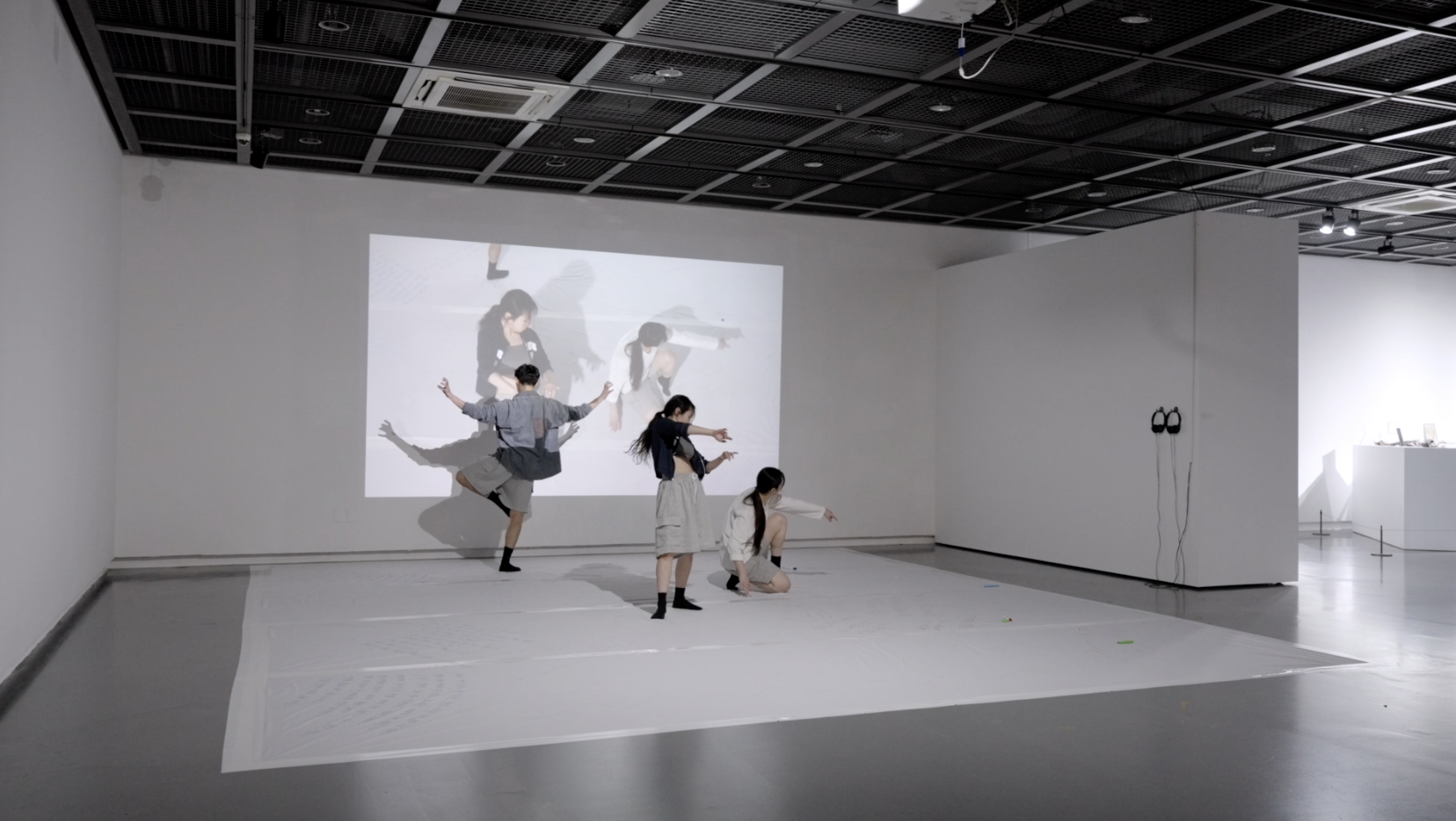
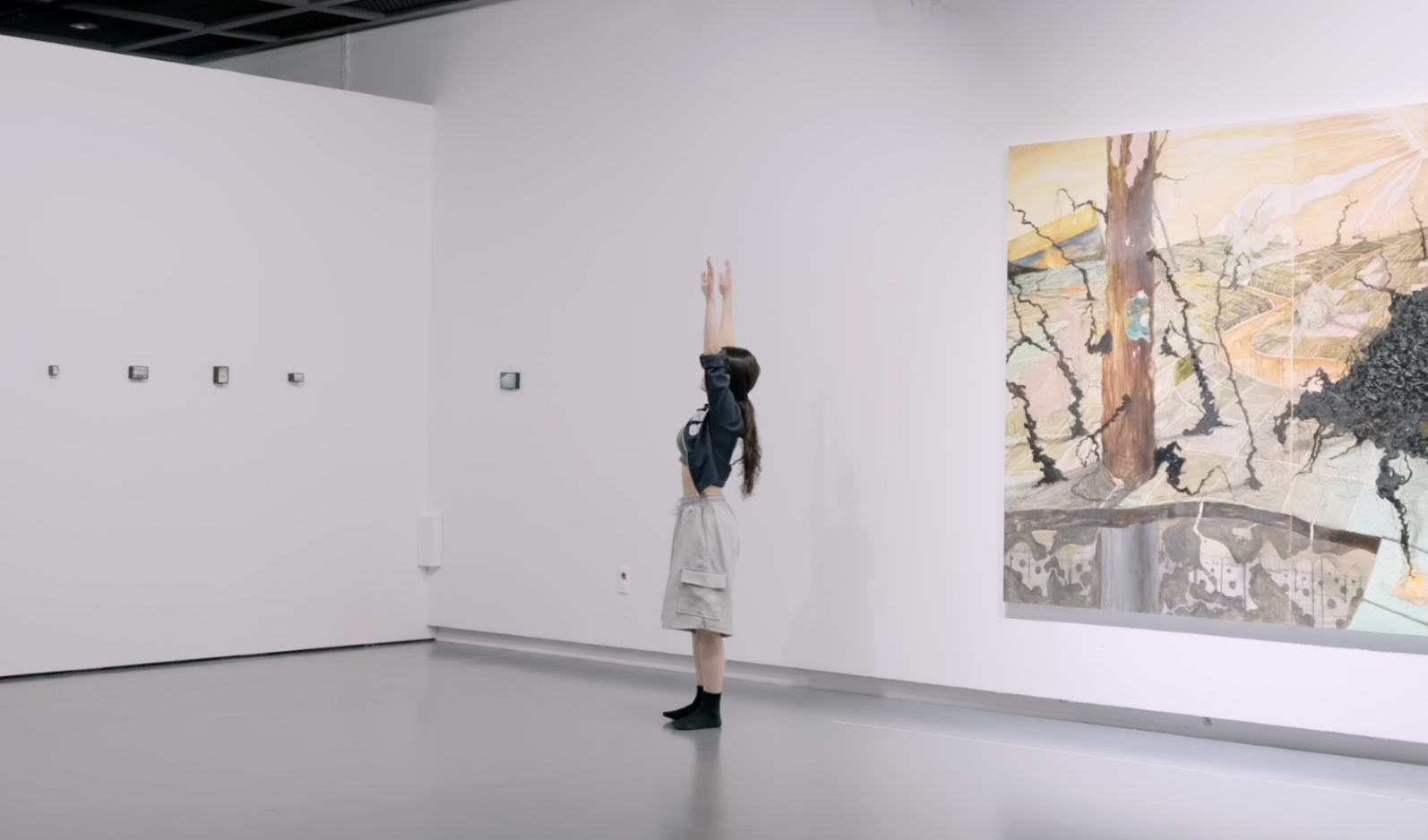
This performance draws on the metaphor of the summer roll, a familiar dish in Berlin’s Asian restaurants, reimagining the body as an ingredient and the stage as rice paper. Referencing gymnastics practices rooted in World War II and East Asian colonial histories, the piece repeats and records these disciplined movements on stage as a way of collectively confronting their legacy.
Layer by layer, the performance accumulates textures through multilingual translation, choreographic research with nonhuman elements, and documentary techniques drawn from Butoh. Through these gestures, the standardized movements of gymnastics gradually dissolve into a shared rhythm that emerges between bodies, languages, and temporalities.
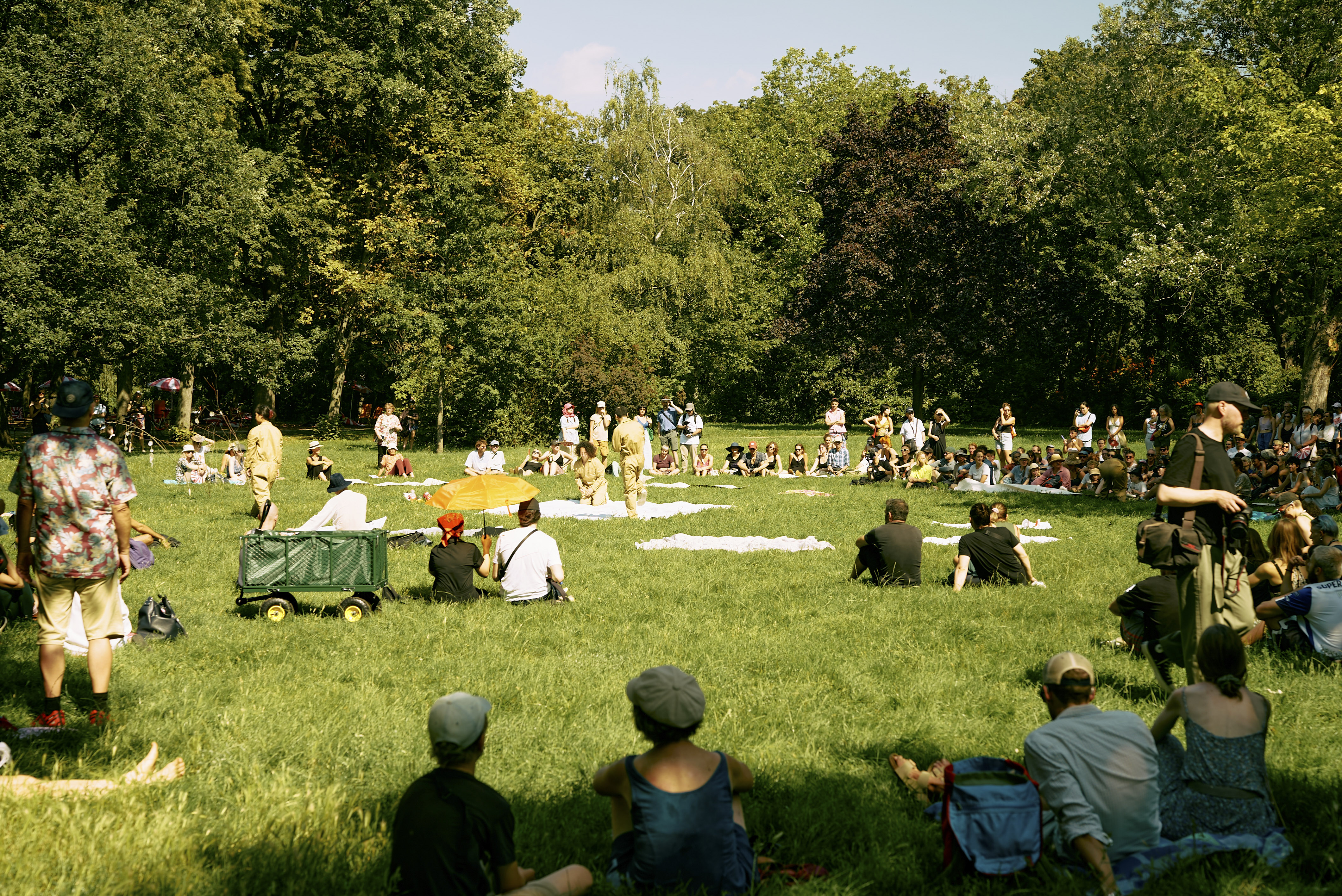
The premiere took place as a 15-minute outdoor performance in a Berlin park during the summer. Performed on a large white canvas, the audience was invited to sit, stomp, crumple, and write freely on the surface. This canvas could be interpreted as a kitchen table, a white plate, or a picnic mat—an open, unstable stage where performance, inscription, and participation overlap. The audience was asked to leave traces during the piece, and, at the end, the canvas was rolled up like rice paper. This act marked the completion of a collective summer roll, a performative recipe for the end of the season.